Nobody Saw It Coming.
Least of All Her.
One woman. One chance. One decision that turned a life of quiet suffering into a story that the whole of Namasere is now witnessing with its own eyes.
"I used to wake up not knowing if my children would eat. Today I wake up to a farm that is growing, animals that are multiplying, and a life I once thought was only possible for other people. FFYIA did not just help me. They gave me back my dignity."
Some stories announce themselves quietly. You arrive expecting a routine field visit and instead you find yourself standing at the edge of something that makes you pause, look around, and silently acknowledge that you are witnessing the full weight of what real change looks like in a person's life. That is what happened the morning we walked onto Akuku Mary's land in Bugiri District. Row after row of tall, vigorous maize filled the air with the particular silence of a farm that is being tended with purpose. And at the center of it all stood the woman who had built it, not with inherited wealth or outside machinery, but with her own two hands and a trust she refused to waste.
The journey to Bugiri was deliberate. FFYIA Uganda Project Trustee Bernard Muhirwa and local mobilizer Osuti Livingstone had come specifically to see the women who had received support through FFYIA's community empowerment initiative, to look them in the eye, walk their land, and understand the truth of their progress beyond what any written report could convey. What they found at Akuku Mary's homestead was not just a woman who had survived. It was a woman who had taken a seed of trust and grown it into something the whole community could see.
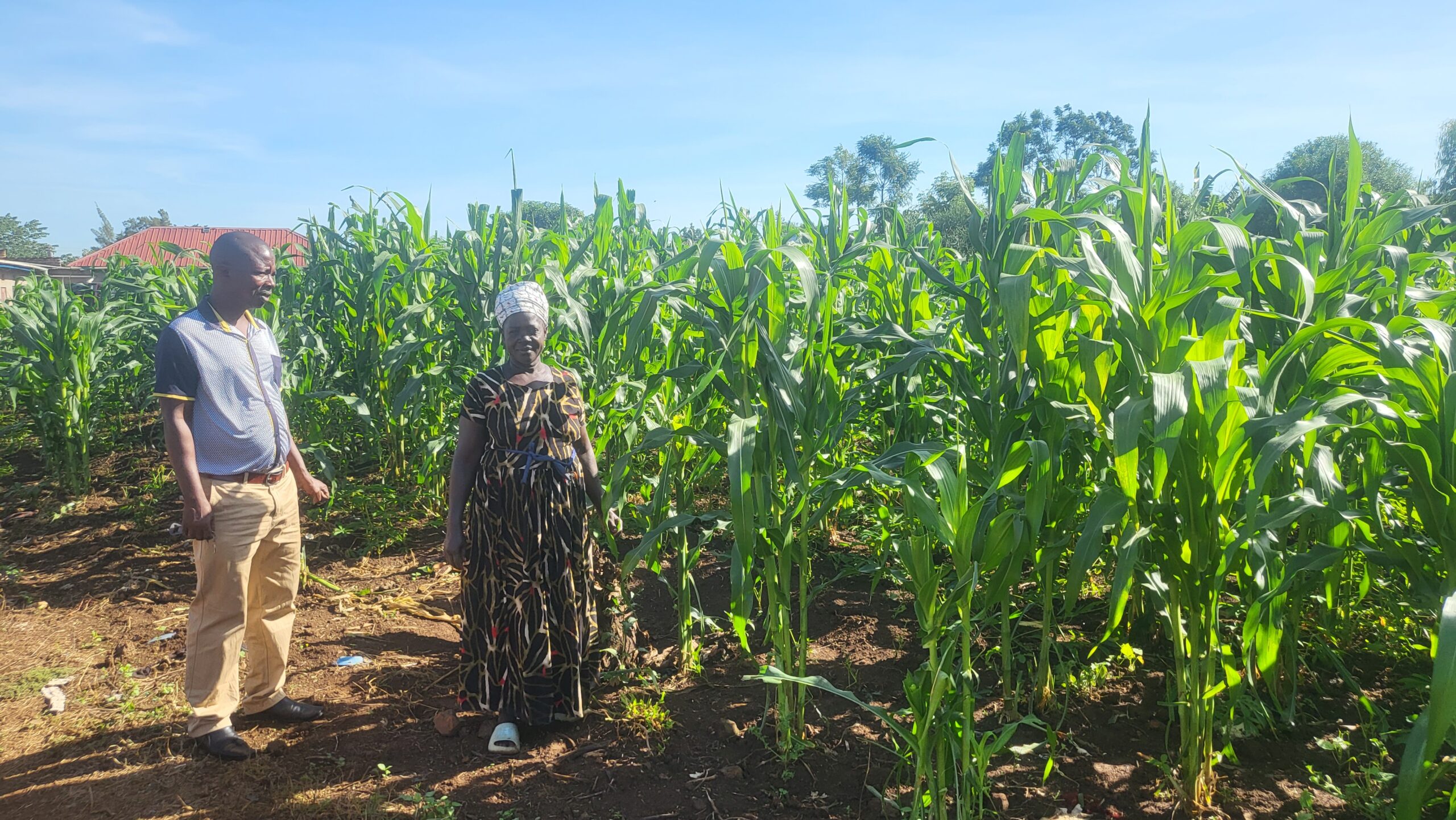
Akuku Mary stands alongside local FFYIA mobilizer Osuti Livingstone on her one-and-a-half-acre maize farm in Bugiri District. April 14, 2026.
Long before the maize was planted, there was a decision. FFYIA has always understood something that many development organisations get wrong: lasting change does not arrive in a bag of donated goods. It arrives the moment a person is trusted with real resources and given the freedom to decide what to do with them. In Bugiri, FFYIA brought that belief to life by organising community women into a collective empowerment structure, functioning like a savings and credit cooperative, where carefully selected participants received seed funding to invest in whatever livelihood they believed could carry their family forward. The only conditions were simple ones: invest wisely, work hard, and grow.
Akuku Mary was one of those women. She heard what was being offered, she understood what it meant, and she chose the earth. She poured every shilling of that trust into a farm, and she did not look back.
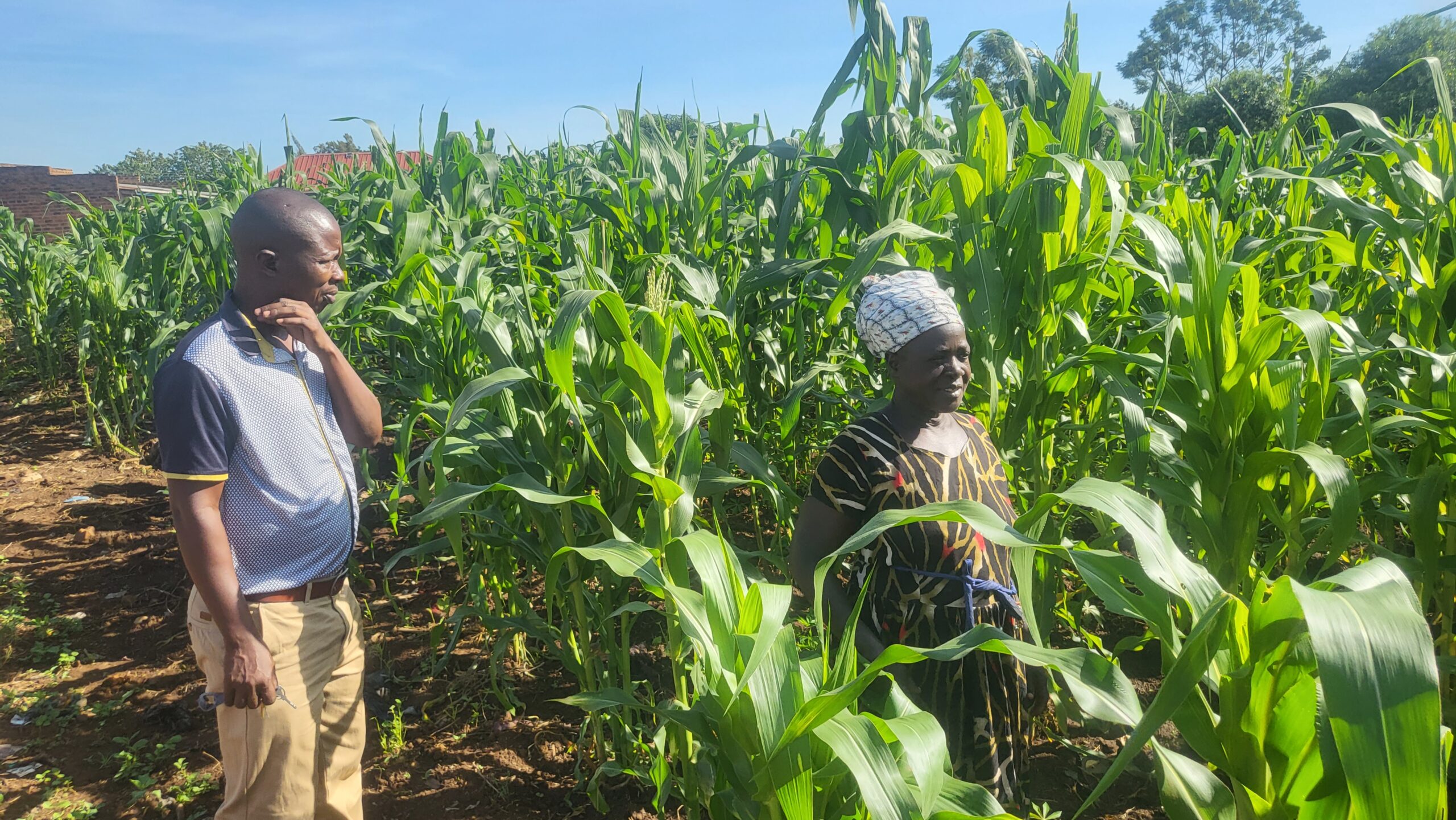
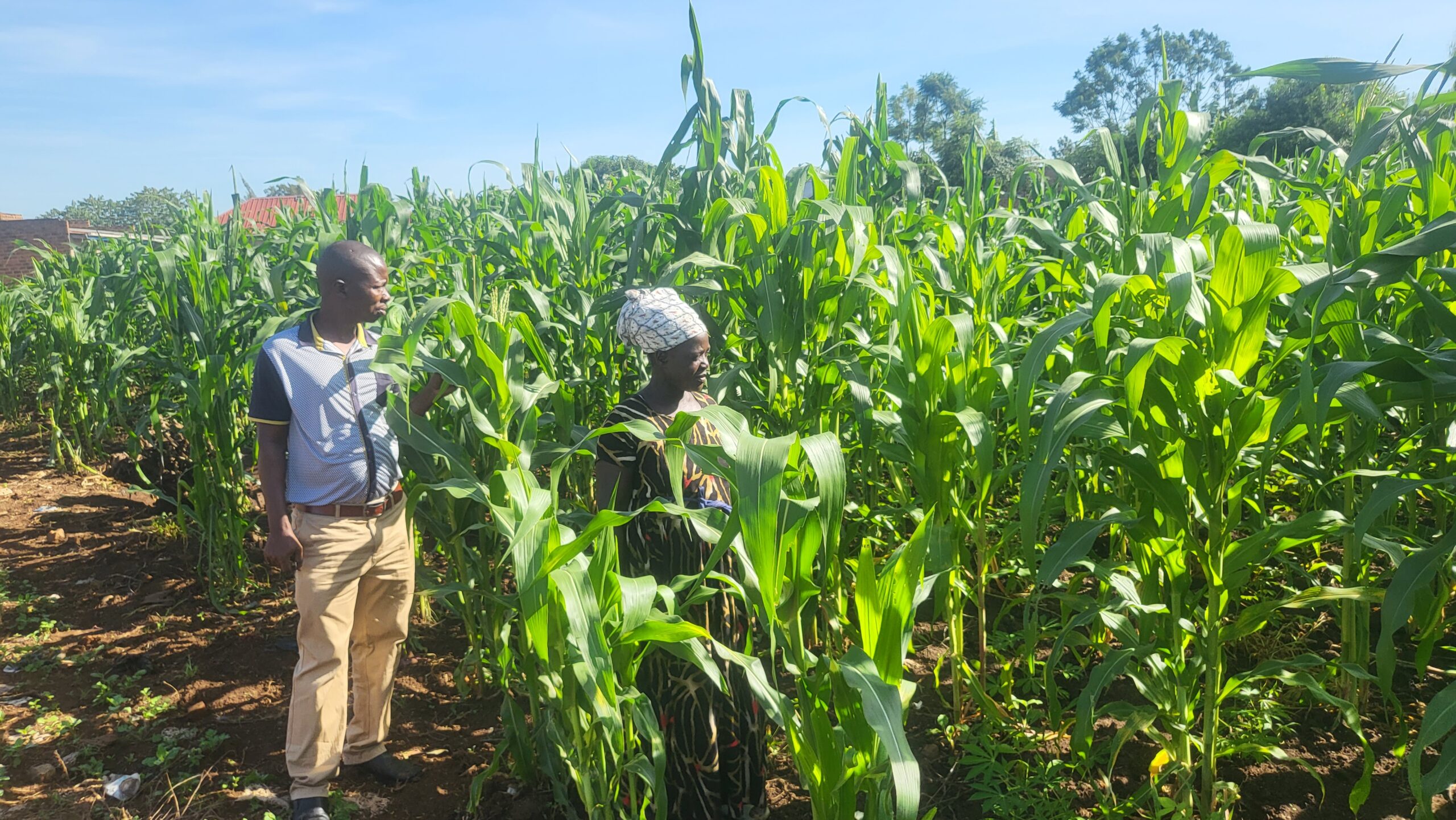
Walk through her farm and the evidence of discipline is impossible to miss. Akuku Mary now cultivates one and a half acres of maize, managing each row with a skill and focus that speaks of someone who treats farming not as a chore but as a vocation. The stalks stood tall and healthy, uniform and proud, with no signs of neglect or half-hearted effort. Beside the maize, she has also developed a cassava garden, deliberately layering her food security and income the way a seasoned farmer thinks several seasons ahead. She is not merely growing crops. She is engineering a life.
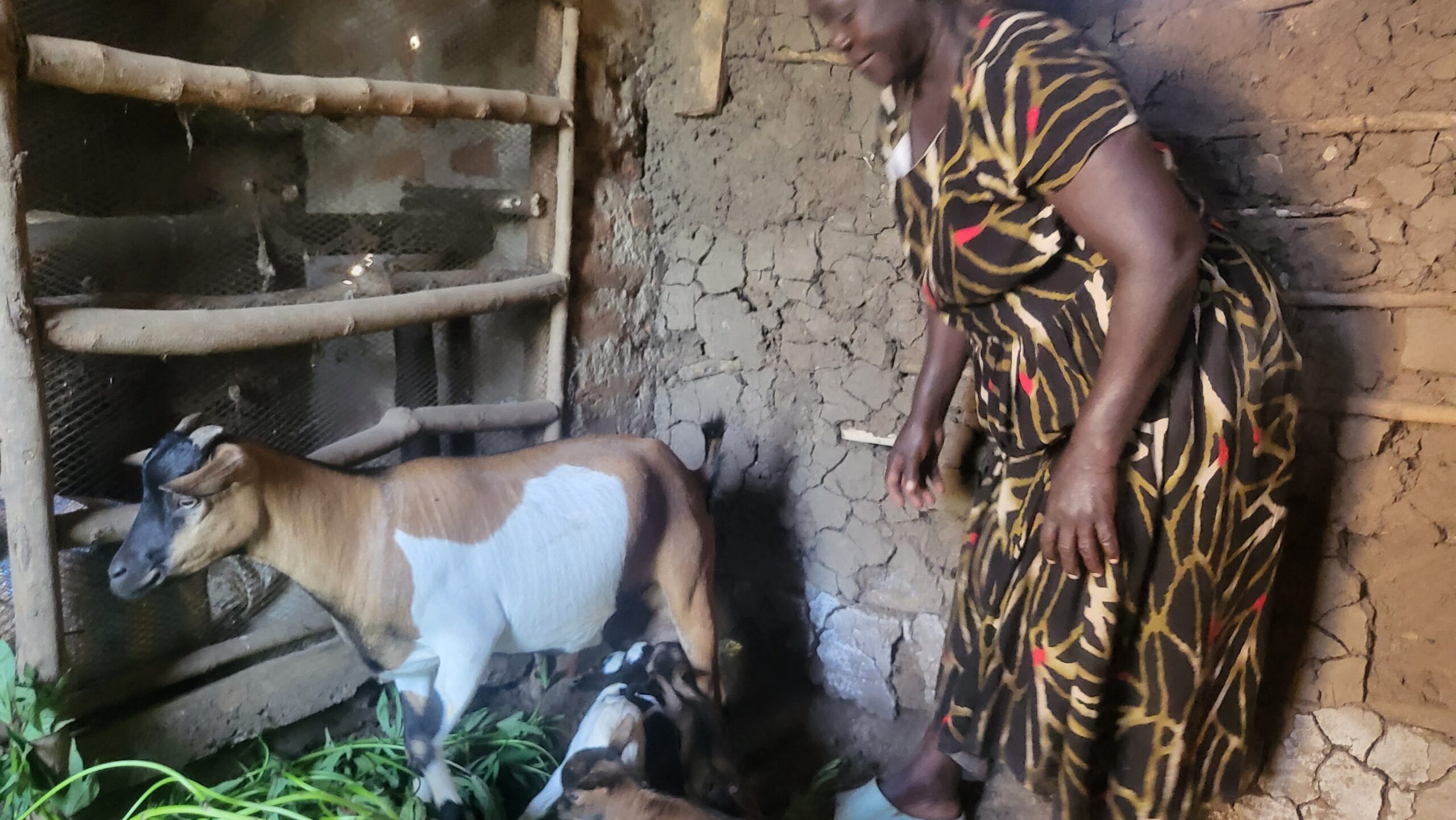
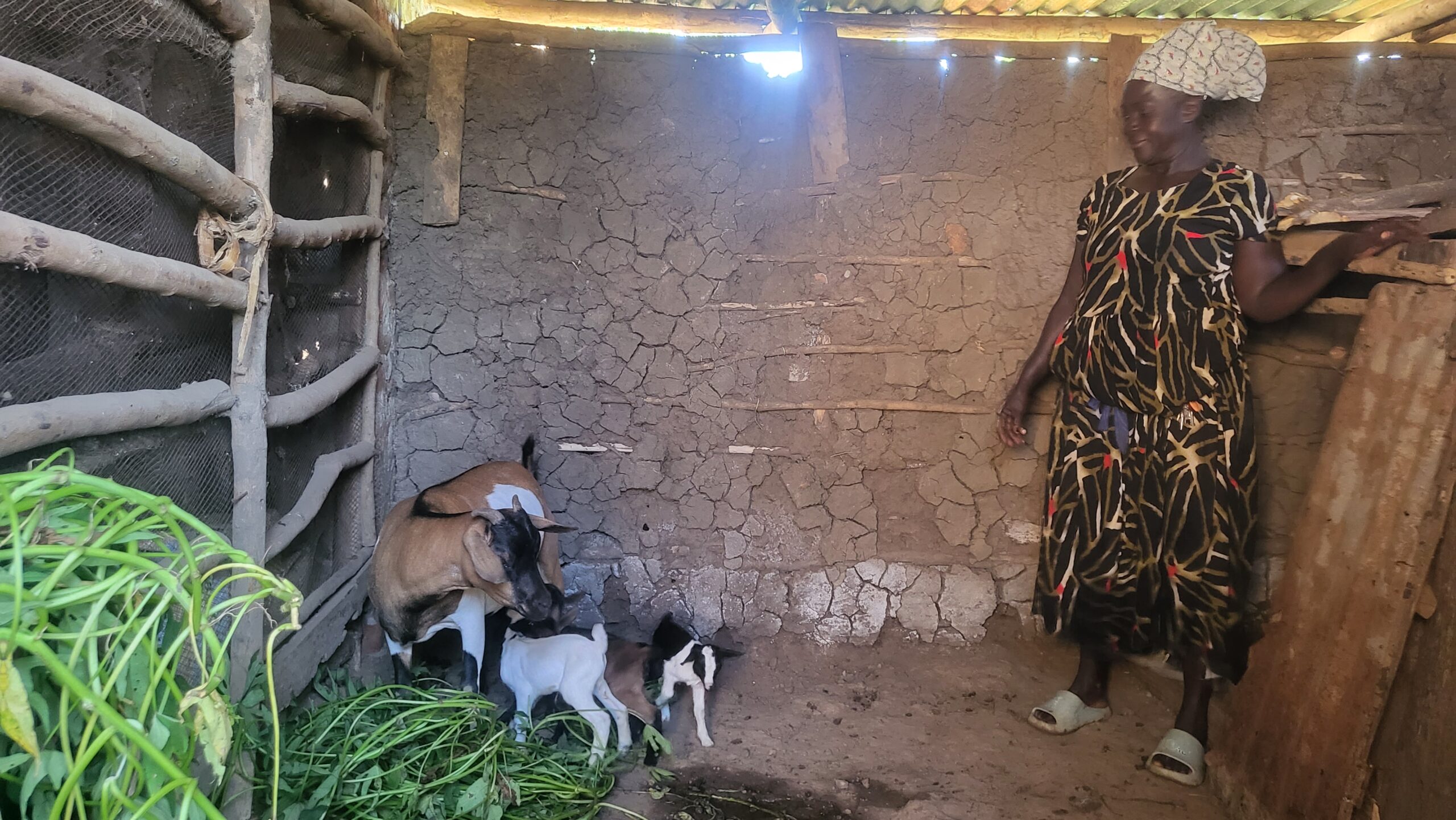
Step past the maize and her second enterprise reveals itself. Akuku Mary keeps a herd of goats in the enclosure beside her homestead, and from the outside you can see them moving freely inside, well fed and clearly at ease. Among them, one nanny goat had been separated from the rest, her young kids barely weeks old, still nursing and needing the quiet. It is a small detail that says a great deal about how she manages her animals: she pays attention, she responds to what each one needs, and she keeps the whole operation running with a farmer's instinct rather than guesswork. A herd that is already reproducing in capable hands is not just livestock. It is a growing asset, and what begins as a modest enclosure becomes a steady, reliable income that no drought can wash away.
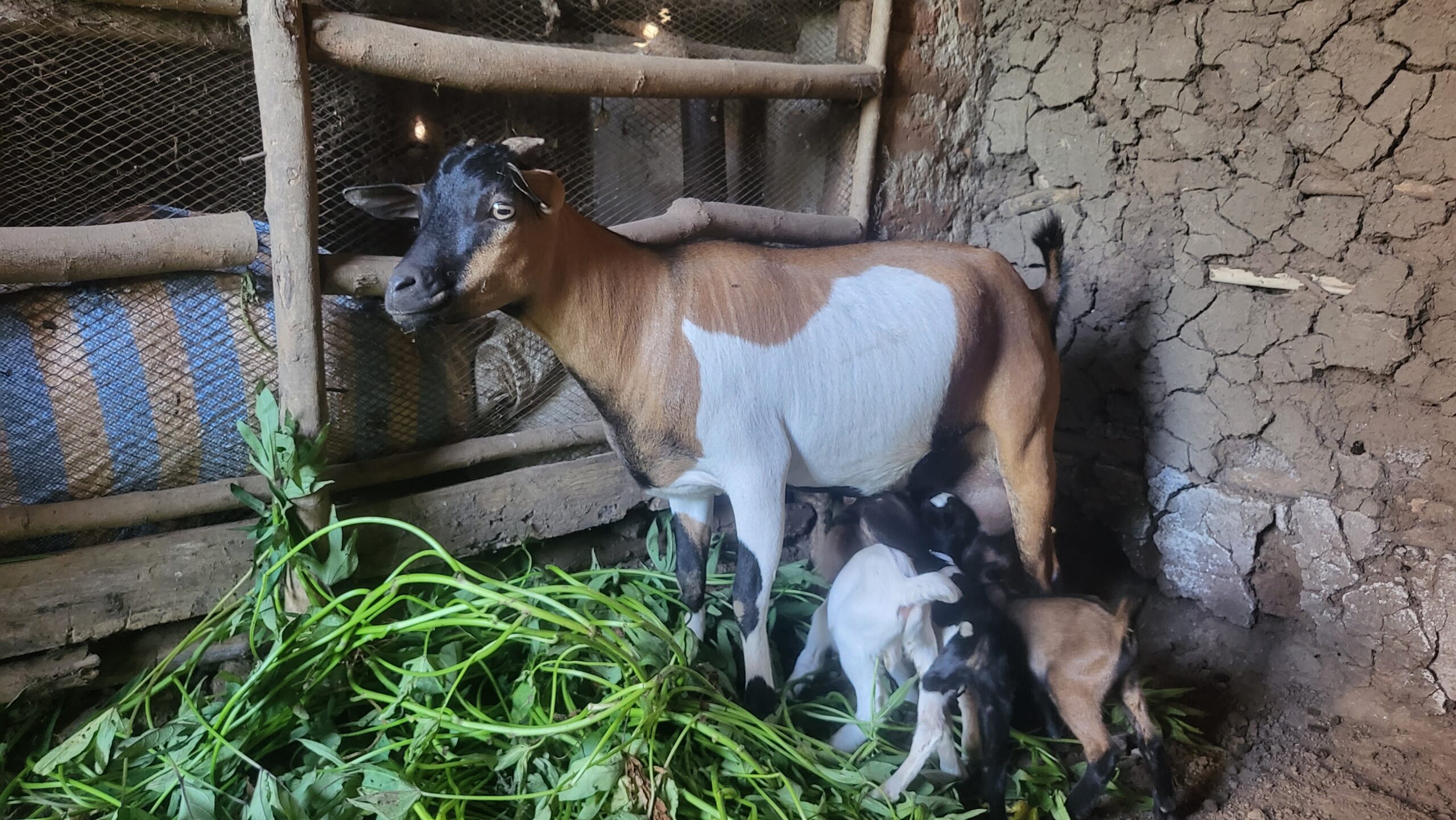
Inside the enclosure: a nanny goat nurses her young kids after being separated from the rest of the herd to give them space to feed undisturbed.
"I thank God who brought FFYIA to us. Before, I did not know how tomorrow would look. Now I have food, I have animals, and I have hope. FFYIA changed our lives from suffering to self-sustainability. I am grateful."
Akuku Mary, beneficiary, FFYIA Women's Empowerment Programme, Bugiri District
She did not need to search for the right words. They came out of her the way things come out of people who have truly lived through something, plainly, directly, and with a weight that settles on you long after the conversation is over. When she spoke about FFYIA, her voice did not carry the polished gratitude of someone saying what they think you want to hear. It carried something rarer. It carried the quiet certainty of a woman who knows exactly how far she has come, and who understands precisely what made the journey possible.
Akuku Mary is one woman. But she is also a mirror. Across Bugiri District, FFYIA has been doing this same quiet, consequential work, finding the women the world passed over, placing real resources in their hands, and then stepping back to watch what human potential looks like when it is finally given room to breathe. The mission of Florence For Youth In Action has always been to transform lives and empower communities through sustainable programs and compassionate partnerships. Standing in Akuku Mary's field, that mission does not sound like a statement on a webpage. It sounds like the rustle of maize in the morning wind. It looks like a young goat feeding close to its mother. It feels like the firm handshake of a woman who now owns something she built herself.
Behind every one of these stories is a name that inspired it all. FFYIA's founder, Penny Leon, built this organisation in honour of her mother, Florence Kekibuga Ntungwa, a Ugandan woman who has devoted her life to uplifting underprivileged families and whose spirit of service continues to this day. Penny does not carry this work alone. A dedicated board of directors stands behind every programme, every field visit, and every woman who receives support, people who believe deeply enough in this mission to give their time, judgment, and commitment to making it real. Every harvest Akuku Mary brings in is a chapter in a story all of them are writing together.
Behind this story are two people who made it possible to document it. FFYIA Uganda Project Trustee Bernard Muhirwa carried out the on-ground assessment personally, walking the farm, speaking with the women, and recording what he found with his own eyes. Beside him was local mobilizer Osuti Livingstone, who continues to serve as the living bridge between FFYIA and the women it supports in Bugiri, the person who knows every name, every household, and every change that has taken place since the programme began. Without both of them, stories like Akuku Mary's would never reach the people who need to hear them.
If you are reading this and asking yourself whether support like yours actually reaches real people and changes real lives, you now have your answer. Somewhere in Bugiri District, a woman named Mary is standing in a field she planted with her own hands. She is not waiting to be saved. She already saved herself. She just needed someone to believe she could.
Every farm, every harvest, every family sustained. It all begins with one decision to believe in someone. Be part of the next story.
Get Involved With FFYIA