Built to Stay: The FFYIA Story of Turning Overlooked Communities Into Places of Possibility
Some organizations plant a seed and walk away. FFYIA plants a seed, waters it, and comes back every season to make sure it is still growing. On April 9, 2026, that truth played out in full view at Florence For Youth Education Center in Namasere, Bugiri District, where a Technical Skilling Center is rising from the ground and an entire community is rising with it. This is what active, expanding commitment to underserved communities looks like.
There are organizations that speak about community transformation, and there are organizations that go back, again and again, to the communities they serve and do the work. FFYIA has always been the latter. The visit that unfolded on April 9 in Namasere was not a ceremonial appearance. It was a working day, starting with a walk through the campus and construction site, and ending with two rounds of meetings that sent everyone home with something renewed: a clear sense that this partnership is alive, and that the best of what it can produce is still ahead.
Before anything else, there was the primary section to appreciate. What greeted the visiting party at FFYEC was not the rough, provisional look of a school still finding its feet. It was an institution that has arrived. Orderly, well-maintained, and alive with the quiet evidence of years of consistent investment, the primary section stands as proof of what happens when commitment does not get switched off after the ribbon is cut. This school was built to serve, and it has been kept worthy of that calling.
But as meaningful as the primary section is, what truly captured the spirit of the day was what lay ahead: the open land, the dedicated plots, and the structure rising at the edge of the campus that speaks most loudly about where FFYIA intends to take this community next.
There is something quietly electric about standing on land that has been set aside for a purpose. The open plots earmarked for the FFYEC Technical Skilling Center carry exactly that energy. Accompanied by the school's Deputy Headteacher of the primary section and a staff member who also serves as the area's Local Defense Officer, the visiting party walked those grounds on the morning of April 9, taking in every meter of what is being planned and why it matters. These are not abstract acres. They are the physical address of a future that young people in Namasere and across Bugiri District have never had access to before. A future where a young person leaves school not just with knowledge, but with a skill in their hands and a trade in their name.
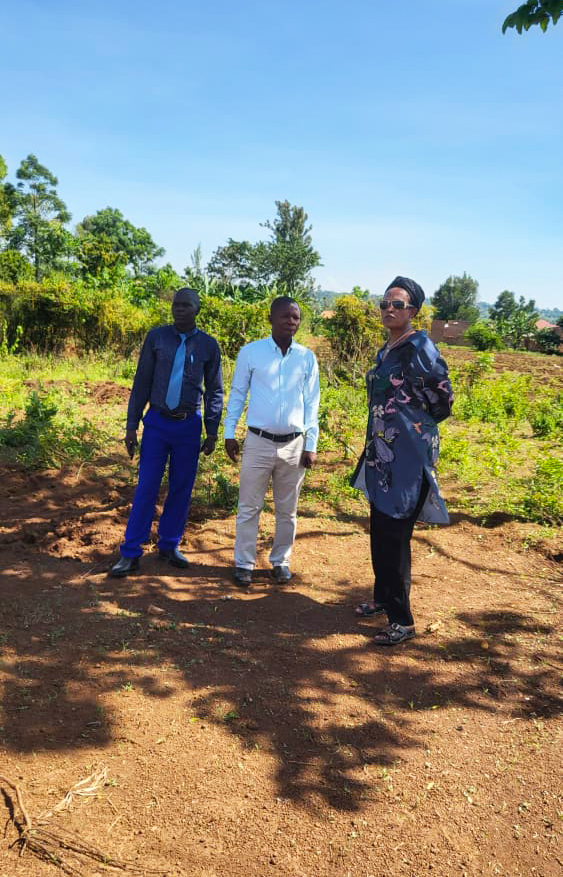
FFYEC Country Director Kwera Irene Nuwagaba alongside the school's Deputy Headteacher and a staff member, standing on the dedicated plots for the Technical Skilling Center. The land beneath their feet is already the beginning of something that will outlast all of them.
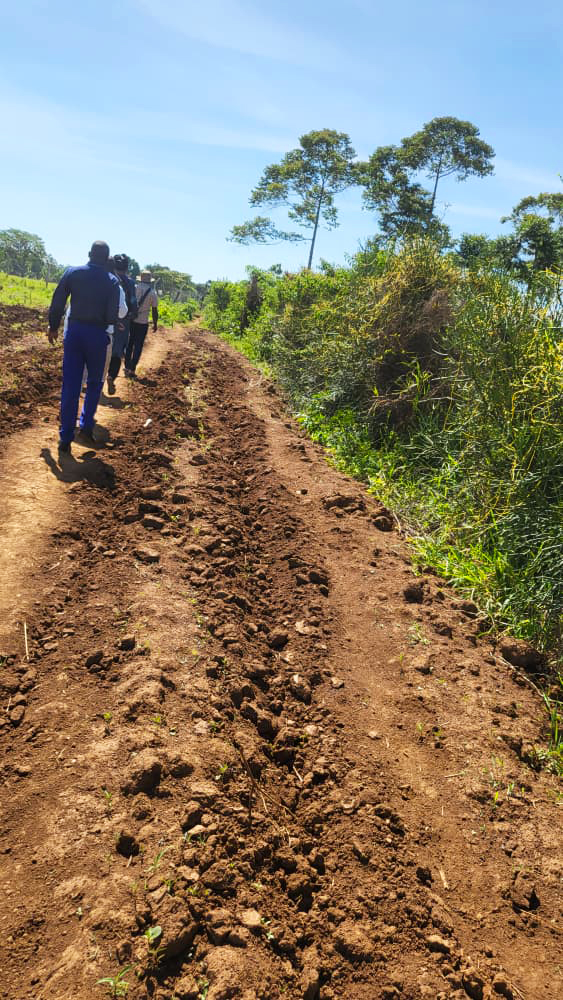
The team walks a freshly cleared access path through the open grounds set aside for the Technical Training Institute. What looks like a dirt road today is the spine of a campus that is coming.
If the land tells you about the vision, the construction site tells you about the resolve. The Technical Skilling Center currently going up at FFYEC does not look like a hesitant project. It looks like a statement. Wide, solid walls of fired red and grey brick stretch across a substantial footprint, anchored by reinforced concrete columns that carry the confidence of a building that knows what it is meant to become. Above, a full timber roof frame is already assembled and reaching skyward, its triangular trusses locked in place. And on the ground, the workforce has not slowed down for a day.
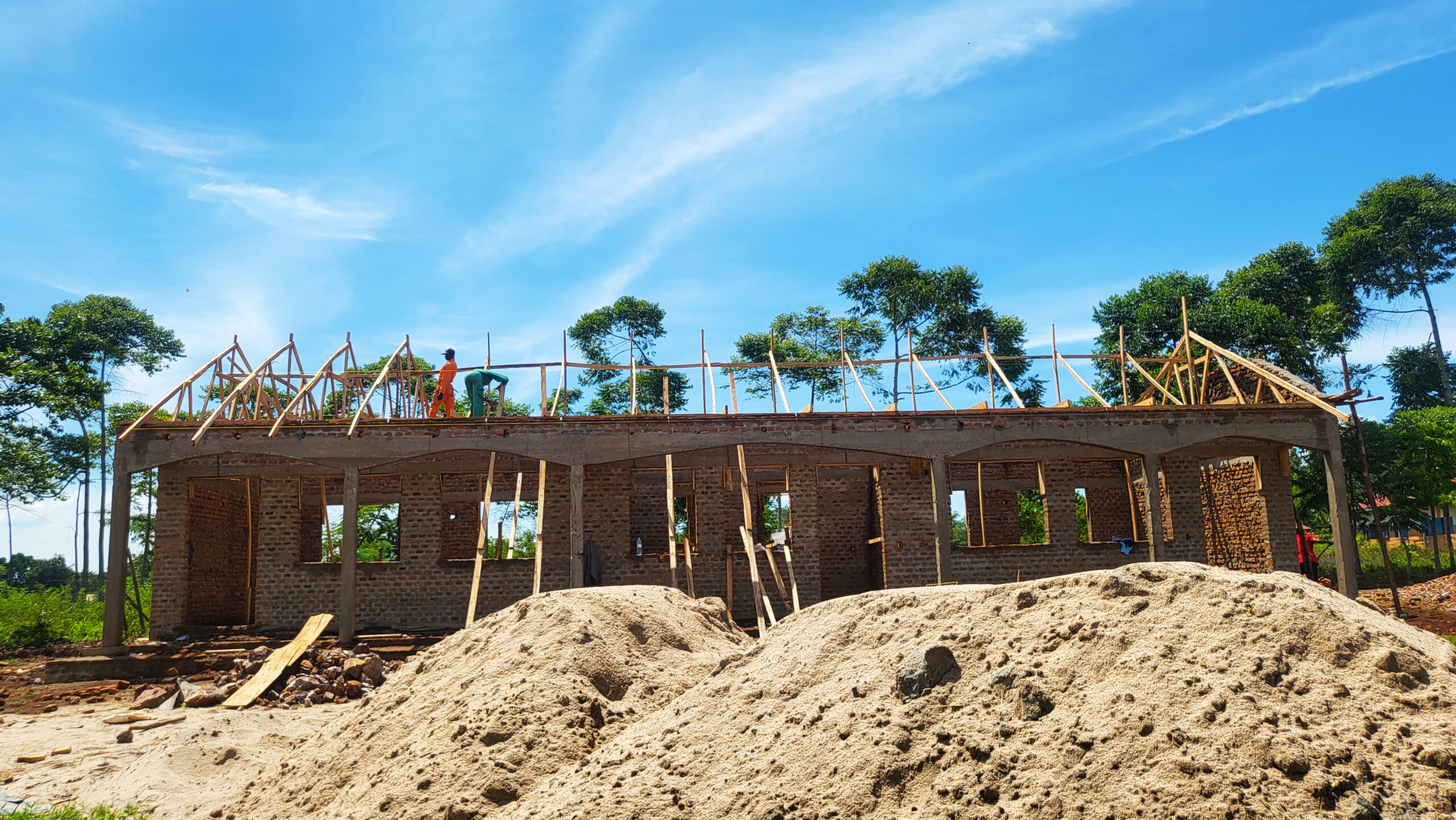
The Technical Skilling Center from the front: a building that already carries the weight of its purpose before a single student has walked through its doors. Roof trusses assembled, walls standing firm, the Bugiri sky watching over it all.
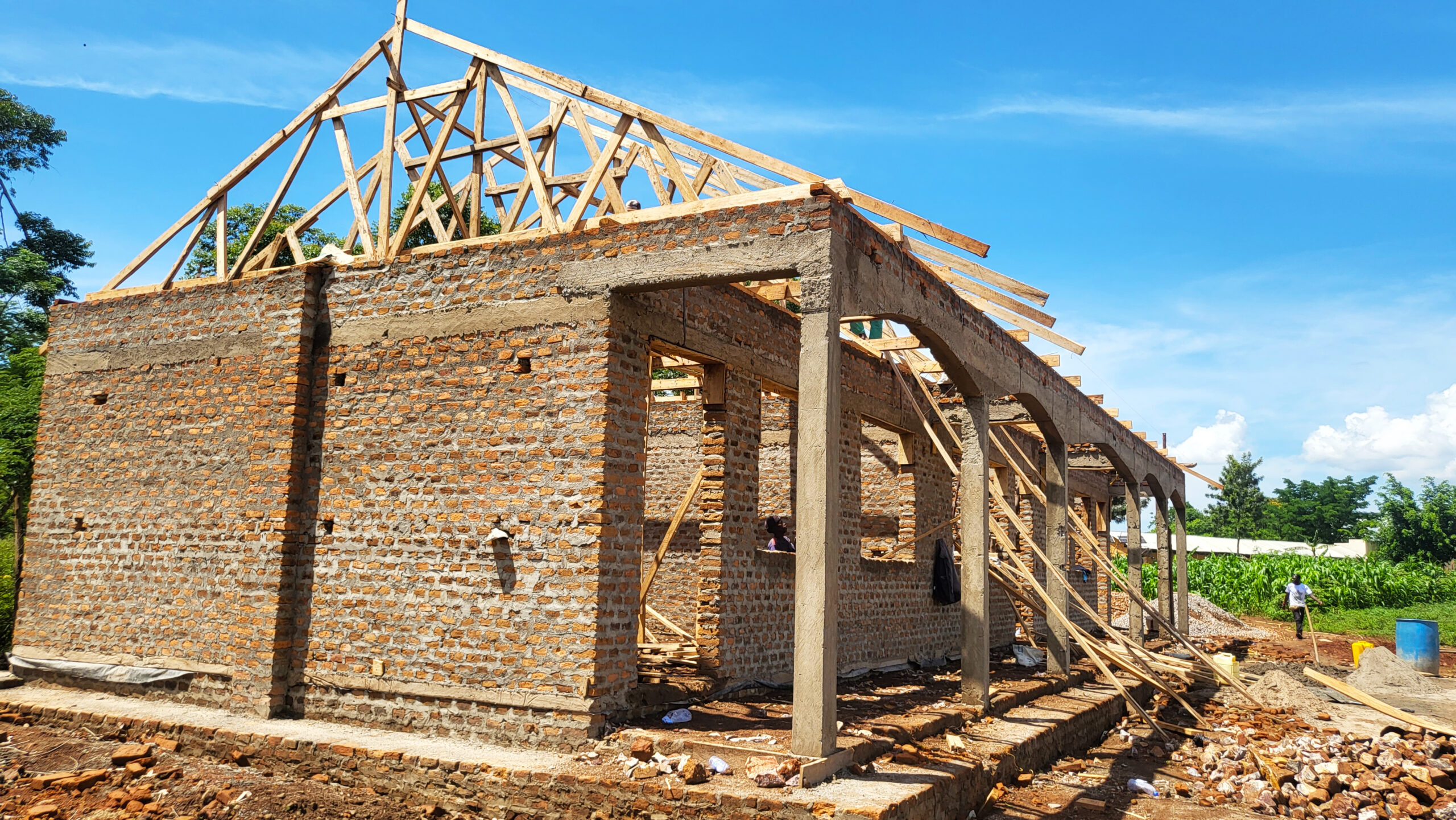
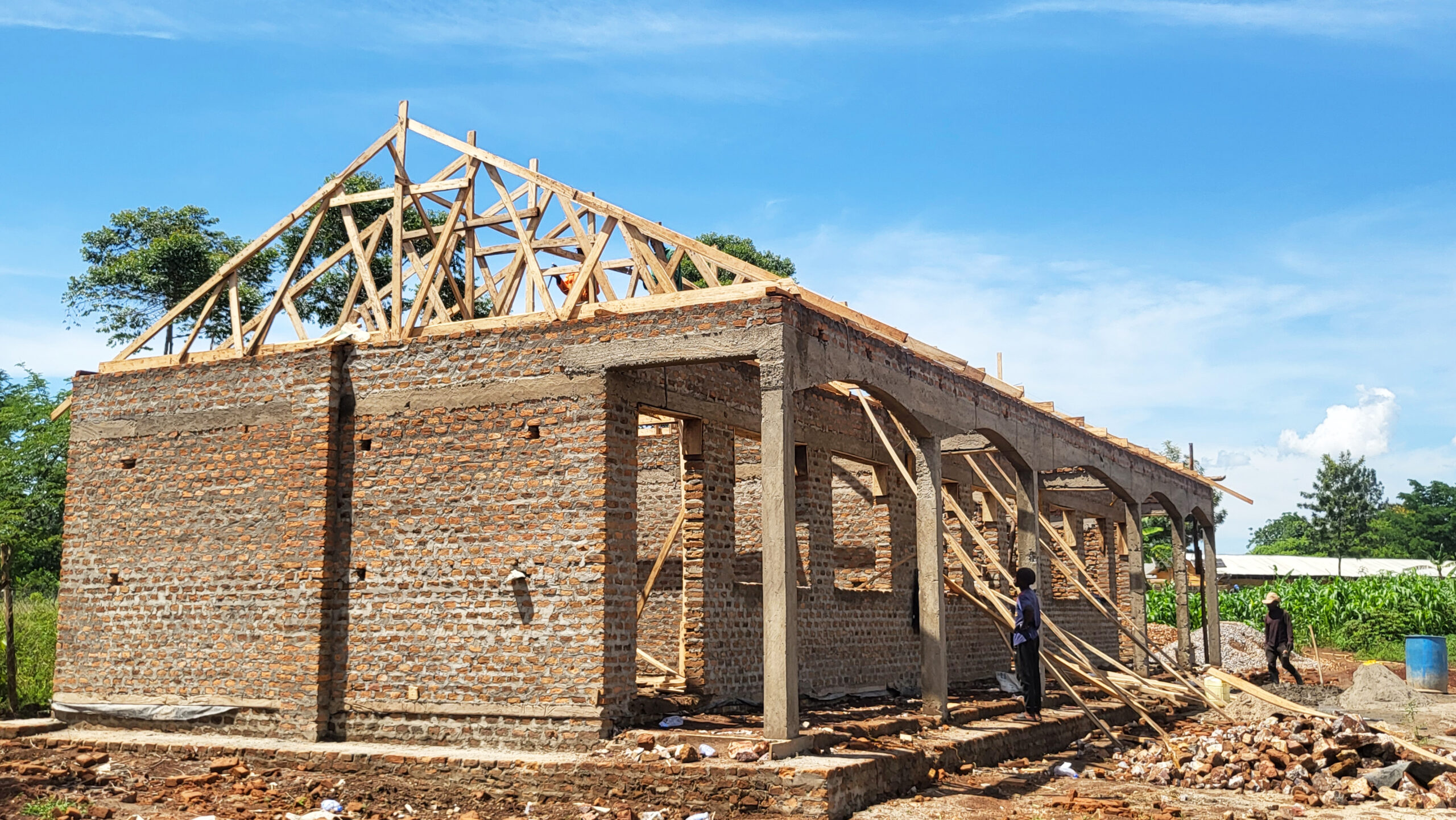
Seen from multiple angles, the ambition behind this construction becomes undeniable. FFYEC is not standing still. It is evolving into exactly what this community needs it to be.
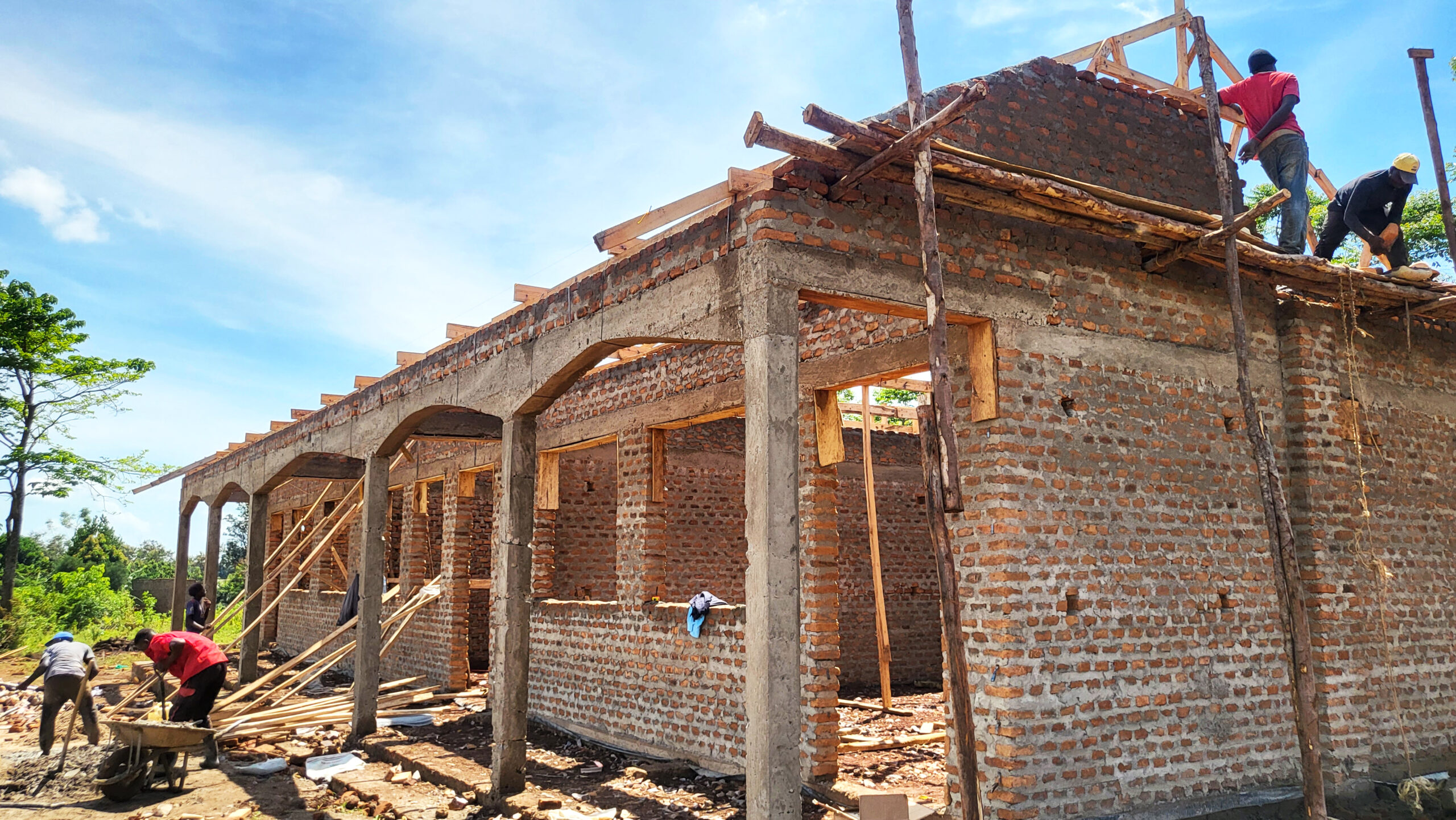
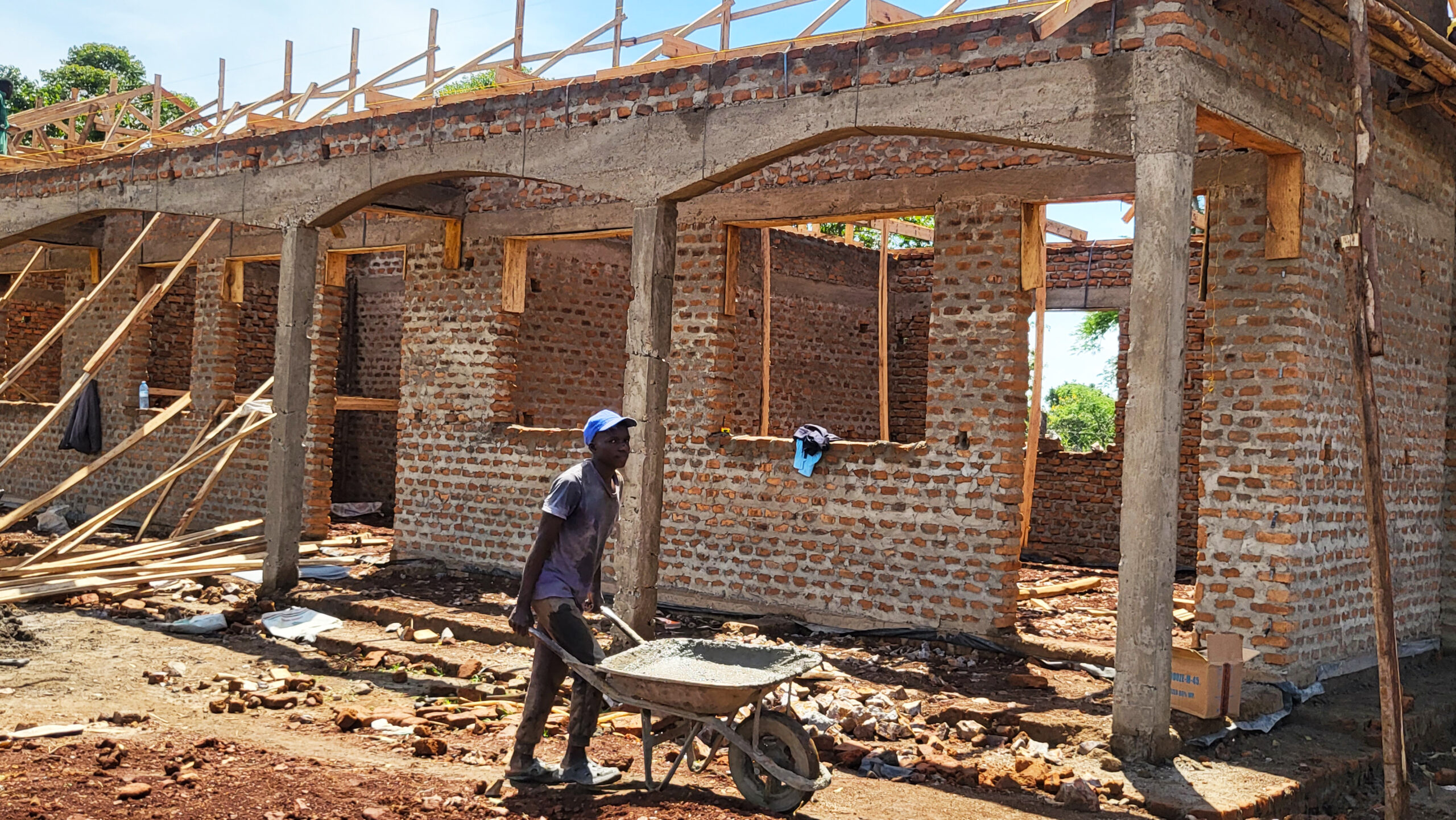
High above and at ground level, the workforce keeps the pace without pause. Every load of cement, every beam lifted into place, is a deposit into the future of Namasere's youth.
After the site tour, the conversation moved indoors, and the room filled with the people who matter most in the entire FFYIA story: the parents, the village leaders, and the elders of Namasere who have watched this school grow from its earliest days. The PTA meeting that followed was not a formality. It was a reckoning with how far things have come, held by people who remember exactly what this place looked like before FFYEC arrived.
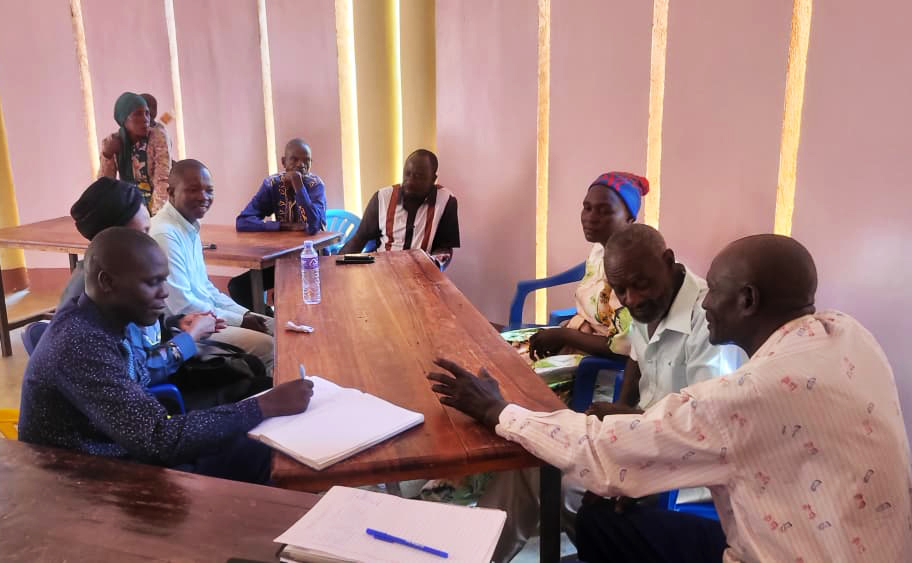
PTA members and village leaders of Namasere in session, voices and concerns on the table. This is what genuine community engagement looks like: a room where the people closest to the children are the ones doing the talking.
These are the parents whose children grew up in an area once considered too vulnerable, too remote, too underserved to expect much from in terms of education. Today, those same children are sitting national examinations and returning with grades that turn heads. The community spoke about that with the quiet, earned pride of people who have seen a real change and know exactly where it came from. They recognised the teachers FFYIA brought to this school, teachers who have held standards high and refused to treat Namasere as a lesser posting. And they expressed gratitude to FFYIA that went far beyond courtesy. It was the gratitude of a community that knows someone made a deliberate decision to believe in them.
The session was also a space where the PTA raised their own concerns and issues directly with FFYEC Country Director Kwera Irene Nuwagaba, who listened carefully and assured them that every matter raised would be taken back to the full school administration for proper attention. That exchange was significant. It was not a one-way address from leadership to community. It was a conversation between partners, and it reflected the kind of relationship FFYIA has worked to build here: one where the community's voice is heard and acted upon.
FFYIA's channels of support for FFYEC were also explained clearly during the session, giving parents and village leaders a fuller picture of how the organisation, as the school's founding body, continues to resource, staff, and grow the institution it brought to their community. The spirit of collaboration between the community and the school administration was celebrated as one of the most valuable things the school has going for it, and the call was clear: protect that spirit, deepen it, and let it drive the school even further than it has already gone.
Every strong school result begins somewhere quiet: a teacher who stayed late, who refused to move on until every child understood, who gave their best not because someone was watching but because the children were there. FFYIA knows this. The final meeting of the day was with the teaching staff of FFYEC, and it was shaped entirely by that knowledge.
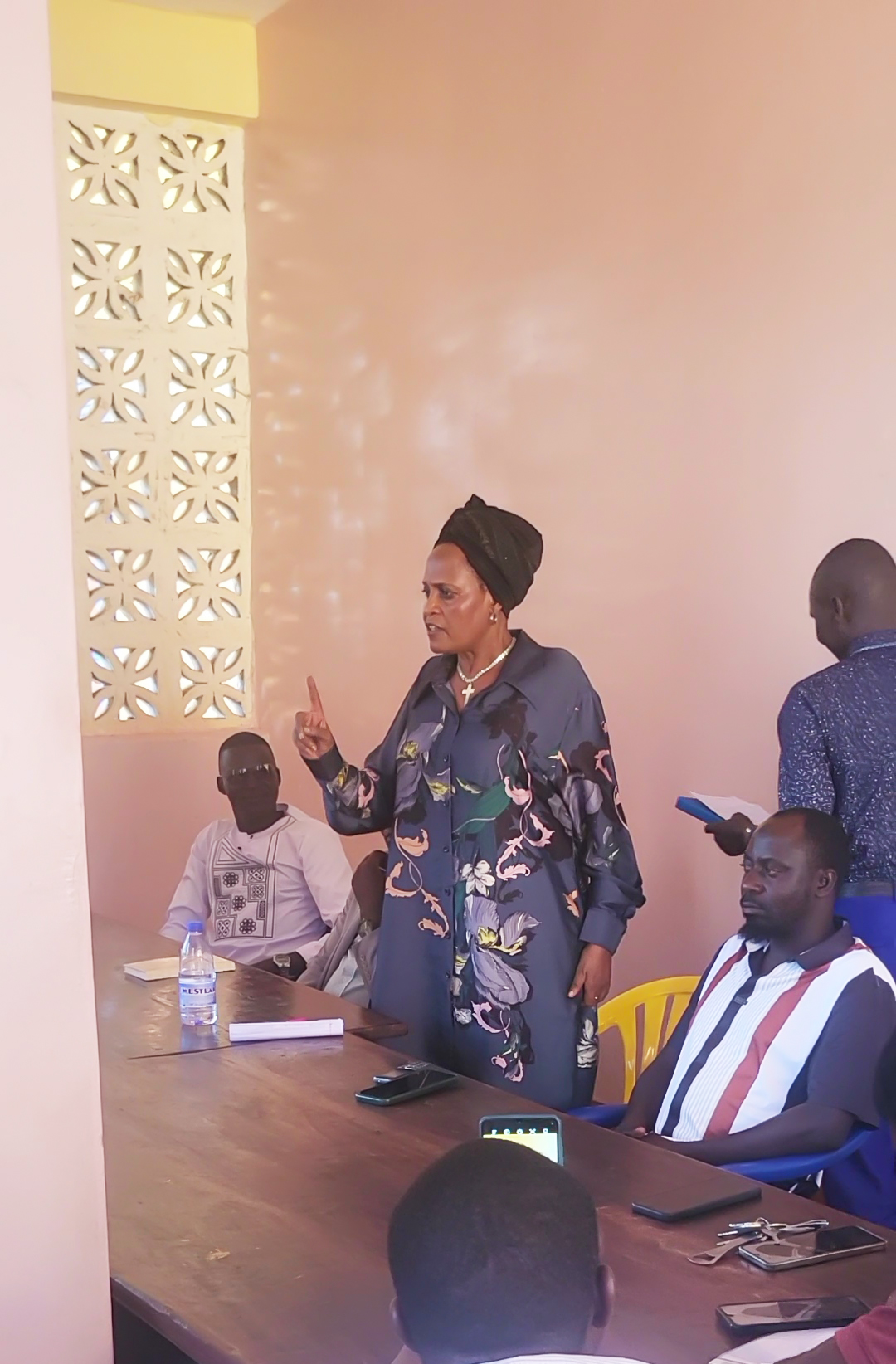
FFYEC Country Director Kwera Irene Nuwagaba on her feet, speaking directly to the teaching staff. She came with recognition for what was achieved last year, and a clear call for what must come next.
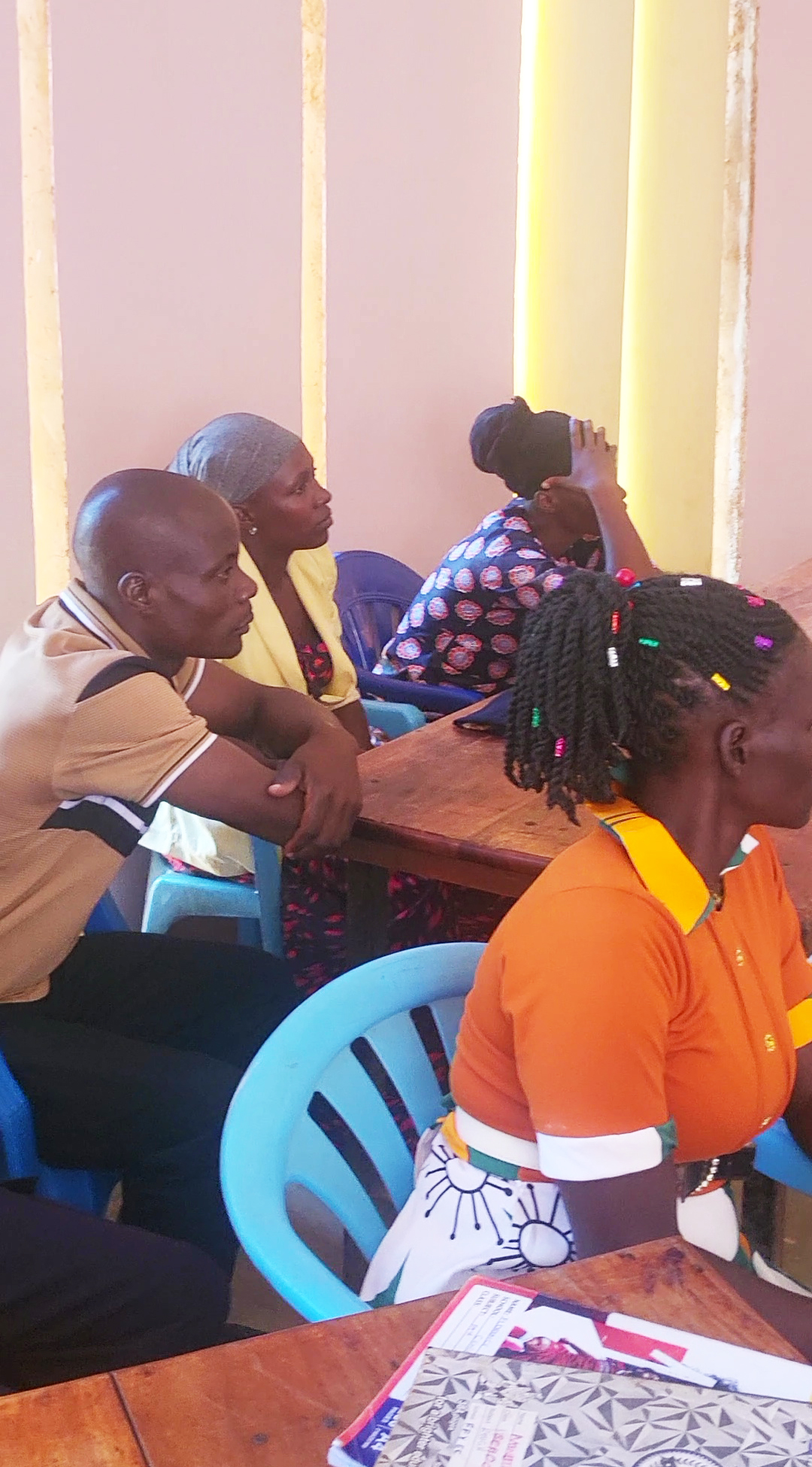
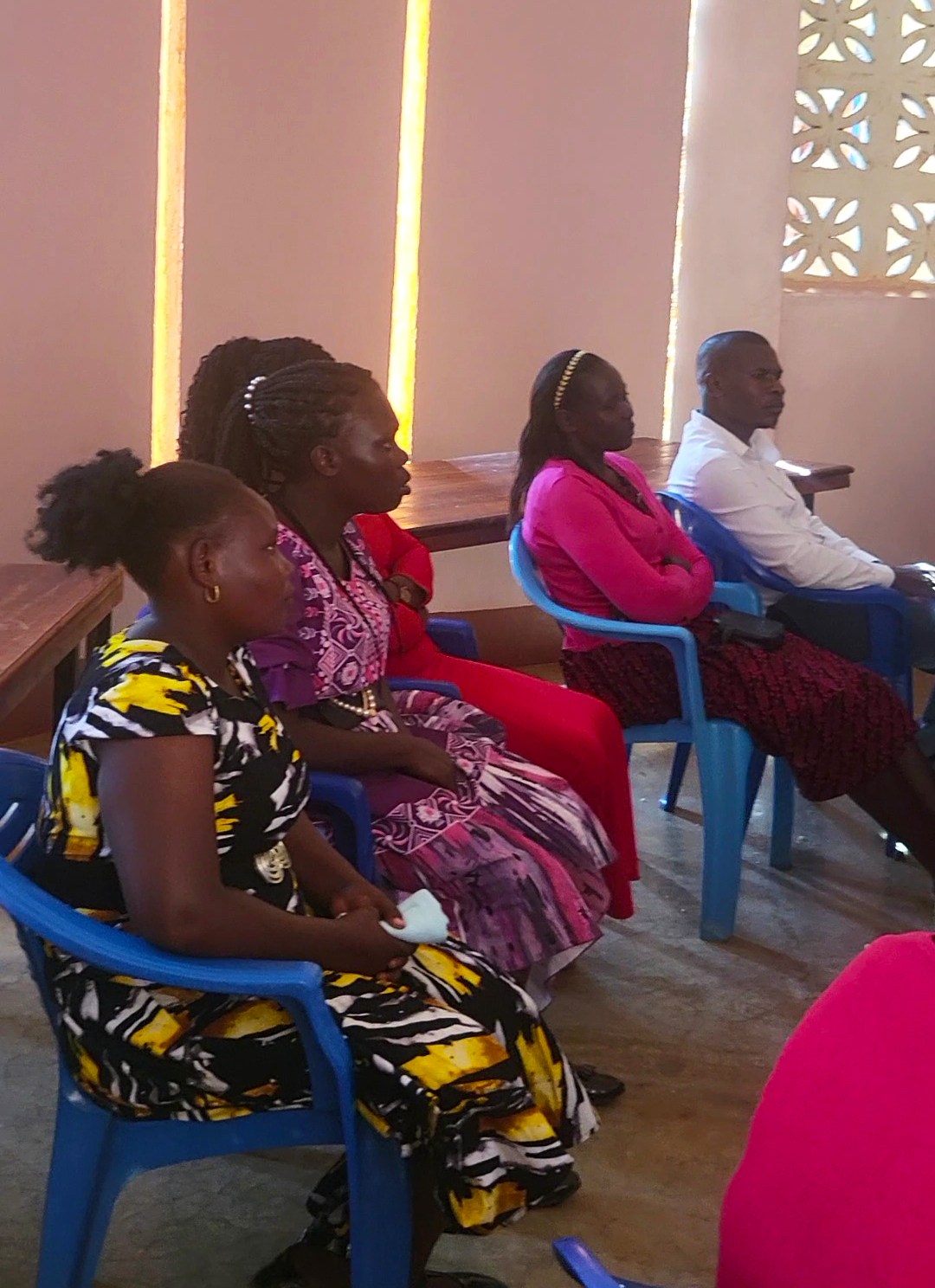
Teachers seated and fully present as Director Irene addresses the room. The focus in their expressions tells the story of a staff that cares about what is being said, and about the children whose futures depend on what they do next.
The school's national examination results from the previous cycle were strong, and FFYIA arrived in Namasere that day prepared to say so clearly and to back those words with action. A token of appreciation was presented to the staff, a recognition that good results do not fall from the sky. They are earned through consistency, through the daily choice to give fully to the children in their care. That kind of work deserves to be seen, and FFYIA made sure it was seen.
The meeting also became a forward-looking conversation. Ideas were exchanged openly on how to push the school's academic outcomes even further in the terms ahead. The staff were called to deepen their unity, to work not just as colleagues sharing a staffroom but as a team bound by a mission larger than any single subject or term. The results of last year, they were told, are a foundation. What comes next is the building.
A community knows when it has been chosen. It also knows, painfully, when it has been forgotten. The people of Namasere in Bugiri District belong firmly to the first group. For years, FFYIA has made the choice, over and over, to return to this community: to invest in it, to listen to its parents, to push its teachers toward what is possible, and now to raise a technical institute on its soil. That pattern of presence is not accidental. It is the character of this organisation.
And Namasere is not alone. Across Uganda and beyond, there are communities that once looked like places where serious investment would never arrive. FFYIA has been making that investment anyway, quietly and consistently, driven by the conviction that geography should never determine a child's ceiling. Every school built, every teacher supported, every student sponsored is part of the same expanding declaration: no community is too remote, too vulnerable, or too overlooked to deserve the full force of this organisation's commitment.
The Technical Skilling Center rising from the ground is the most visible expression of that commitment right now. But it is not the only one. It lives in every child across Bugiri who opens a national examination result and finds their name among the top performers. It lives in the village elder who speaks about FFYEC with ownership rather than distance, because this school has woven itself into the fabric of Namasere. It lives in the teacher who walks into a classroom on a Monday morning and gives everything, knowing that the organisation behind the school gives everything too.
Florence For Youth In Action does not measure its work in buildings alone, though the buildings matter enormously. It measures its work in transformed trajectories, in communities that have moved from vulnerable to vibrant, and in the stubborn, daily insistence that every child deserves the same quality of education and opportunity as any child anywhere else in the world.
In Namasere, in Bugiri, and in every community FFYIA has chosen to stand with, that insistence is alive. And the work continues.